Woodworm Treatment Specialists
When we talk about Woodworm in relation to construction timbers, what we are actually referring to are a number of species of Wood Boring Beetles found in structural roofing and flooring timbers of buildings. Some of these Wood Boring Beetles or “Woodworm” also infest joinery timbers. For example, skirting boards, panelling, architraves and doors. Woodworm can also be found in furniture and musical instruments as well as many other timber based products.
Put into prospective there are around 400,000 species of beetle. Here in the UK there are only 5 main species of Wood Boring Beetles that are responsible for the majority of Woodworm damage to structural timber in buildings:
Common Furniture Beetle • Wood Boring Weevils • Death Watch Beetle • House Long Horn Beetle • Powder Post Beetle
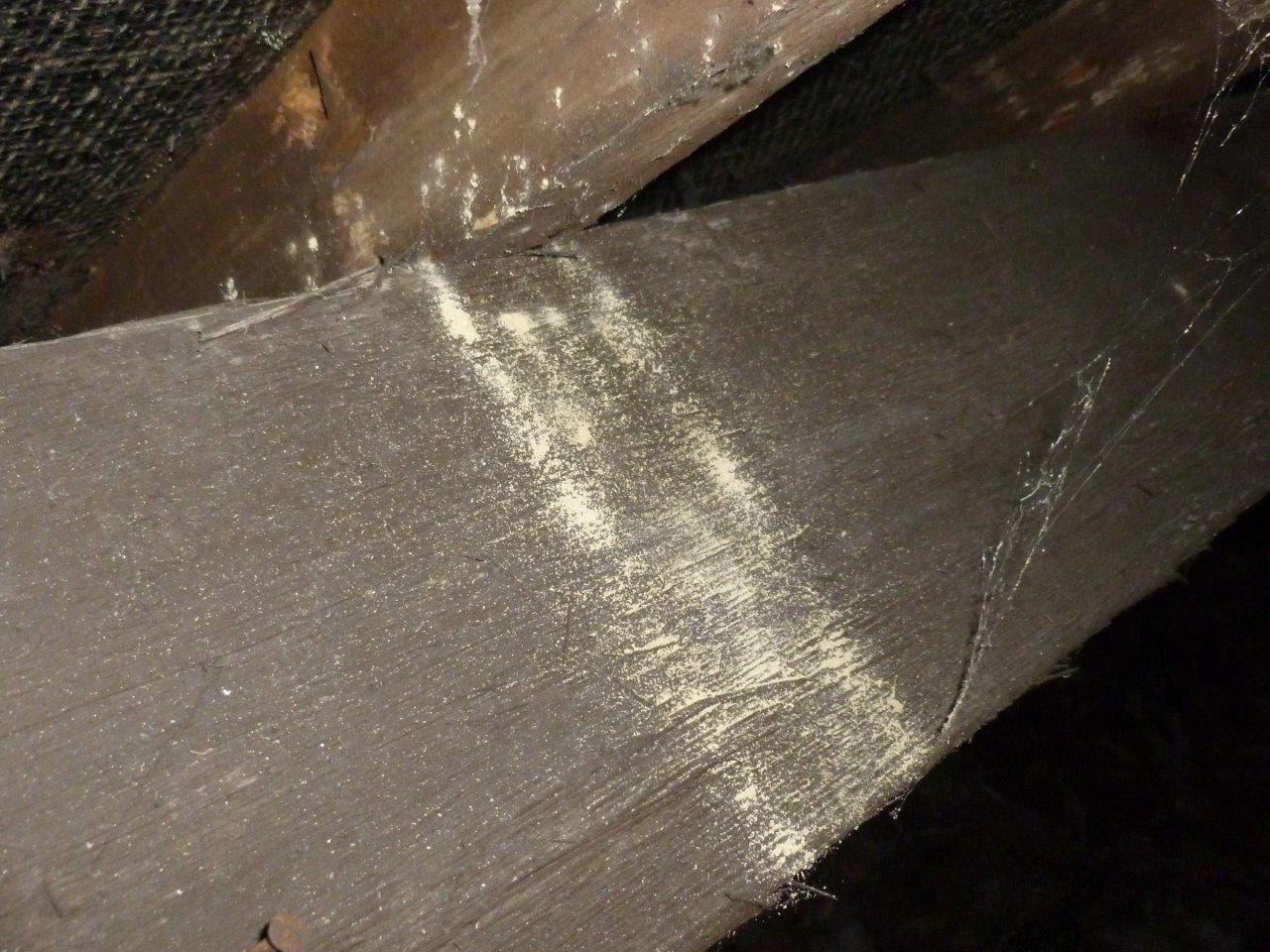
Woodworm Emergence Holes - Frass fallen onto Timber below.
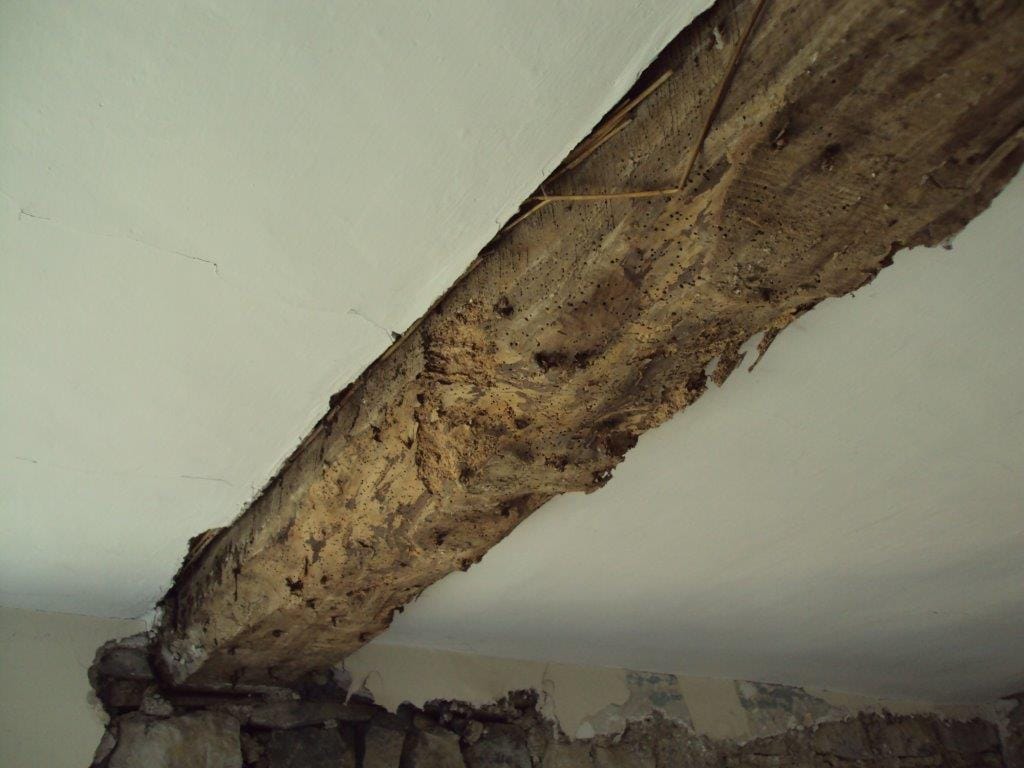
Death Watch Beetle Attack
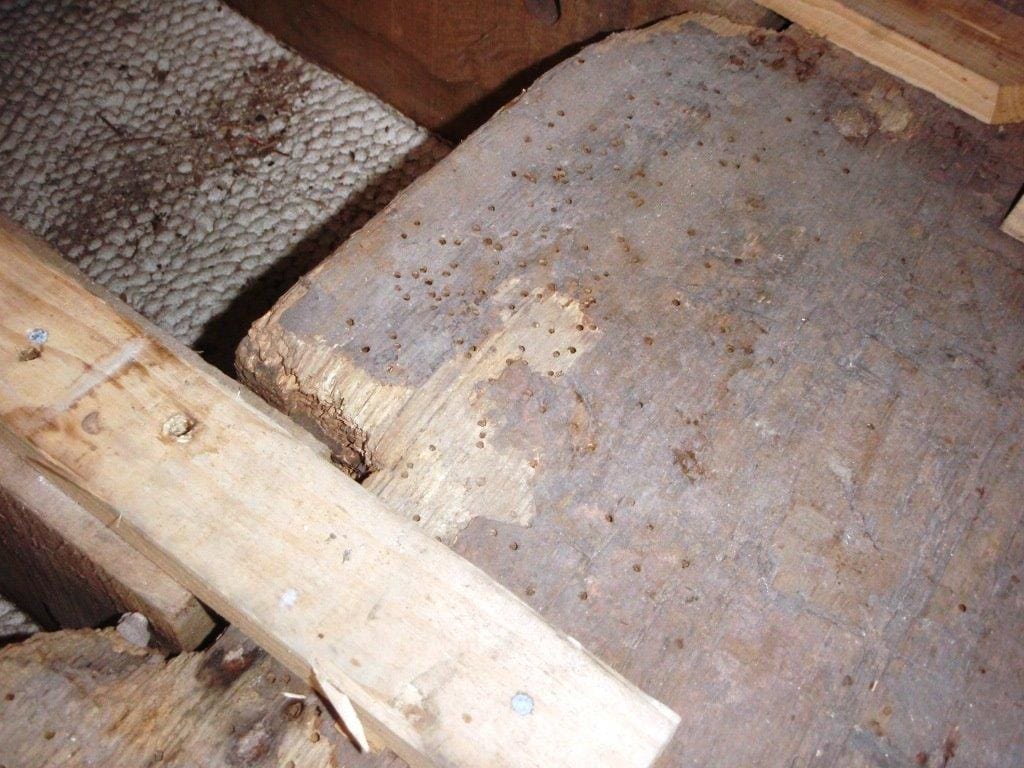
Death Watch Beetle Emergence Holes
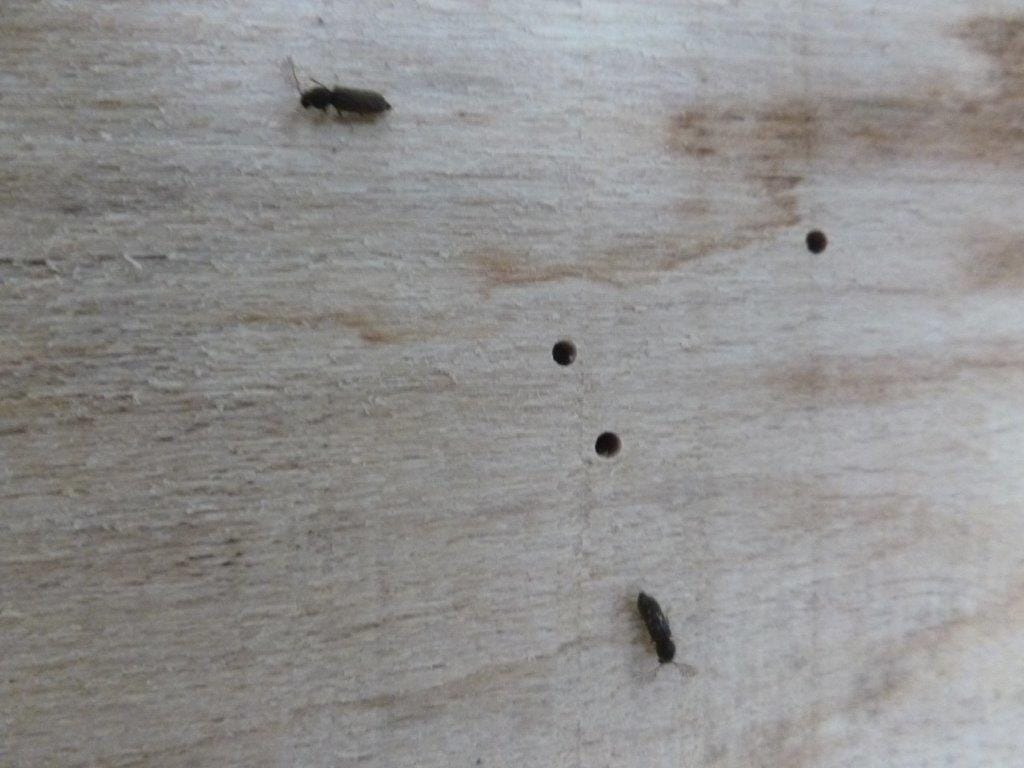
Two Wood Boring Insects (Ptilinus Beetle) Directly After Emergence
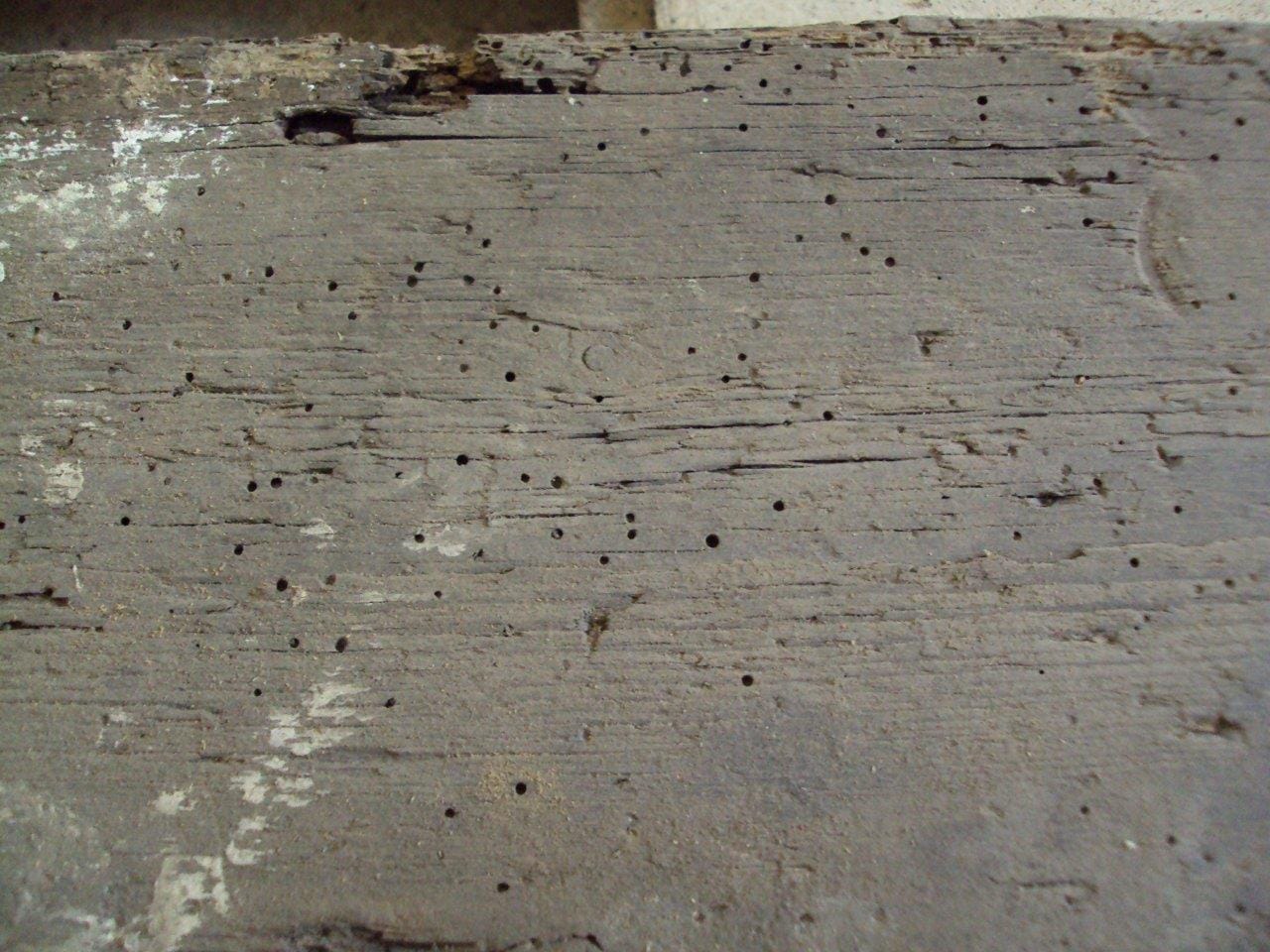
Woodworm Emergence Holes
The term Woodworm should actually only be used to describe the Common Furniture Beetle (Anobium punctatum). Due to the damage characteristics of other Wood Boring Beetles being so similar, it is totally understandable why the term Woodworm is so often used by non specialists to describe other Wood Boring Beetle or Insect infestations.
Typically you will see small holes (flight holes) in the surface of timbers, sometimes accompanied with bore dust (frass) deposited directly beneath or adjacent to the flight hole. These flight holes alert an occupier or building surveyor that a problem may exist.
It is important to have a professional survey carried out by a surveyor who specialises in timber infestation in order to ensure that the damage characteristics are correctly attributed to the right species of Wood borer. Our surveyors are experts in Wood Boring Beetle infestation of building timbers and they are able to give recommendations in relation to any Wood worm treatment that may be required.
Not all “Wood worm” needs to be treated however. There are species of Wood Boring Beetles that do not require specialist chemical treatment. In addition not all infestations are active, they may have been treated before and/or vibration within the building could be responsible for bore dust being dislodged, common in under stairs areas.
With offices in Birmingham, Bristol, Bromsgrove, Cardiff, Cheltenham, Leamington Spa, Llanelli, London, Newport, Plymouth, Stockport you will never be too far away from a Protectahome Surveyor. To arrange for one of our expert Surveyors to carry out a Woodworm Survey please
Contact Us on 0800 055 6966 or email
web@protectahome.co.uk. 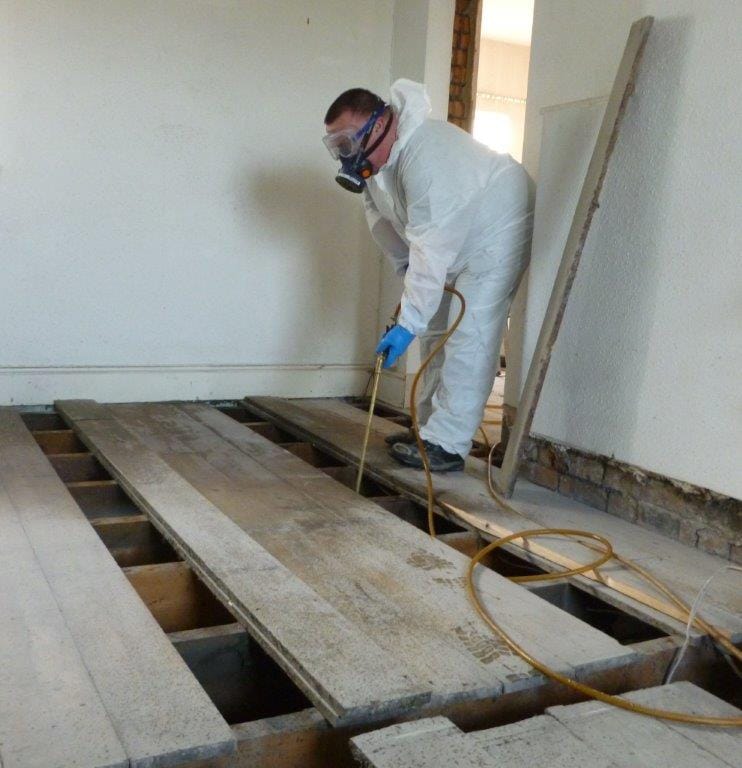
Protectahome Technician Undertaking Timber Spray Treatment